
During my family vacation, at dinner in a restaurant, I sat at a large table, my children happily spooned away, and I chatted with other travelers about healthy eating.
If someone asks me if I have any general nutritional advice, I'm happy to talk about the rather unconventional positions from my book.
I am a private physician in private practice specializing in longevity medicine, and anyone who comes to our practice for the first time receives my "patient handbook", which contains the recommendations I give people at the beginning.
For example, I advise consuming no more than 1 g of omega-6 fatty acids and 0.5 g of omega-3 fatty acids per day.

I told my tablemate that this wasn't just about theory and studies; rather, I could also show patients through blood tests the positive effect a reduction in the consumption of polyunsaturated omega fatty acids has on their bodies.
He asked with interest whether this could also be seen in a "complete blood count"? His family doctor did one of these from time to time, and the results were always excellent.
That evening I suddenly realized that people are often "sold" a "complete blood count " as a comprehensive laboratory test.
I explained to my conversation partner that very specific blood tests are necessary to determine whether fats are becoming rancid in the body, tests which are unfortunately not included in a standard blood test. A special test for, for example, oxidized cholesterol would be required.
He was genuinely surprised.

Therefore, I would like to briefly explain what a complete blood count actually is...
...and why I almost never determine it:
A "blood test" actually only looks at three different types of cells:
- The red blood cells (erythrocytes) – these make up approximately 43% of the blood.
- the white blood cells (leukocytes) and
- the platelets (thrombocytes), which together make up about 2% of the blood.
If it is a "small" blood count, then only the number of these cells is determined, as well as the concentration, size and composition of the erythrocytes.
The complete blood count
The test costs around four euros and reveals whether (and if so, what type of) anemia is present, whether there might be inflammation, and whether one of the key components of blood clotting is present in sufficient quantity. I often and gladly order it (as do all other doctors and hospitals) because it provides me with a great deal of fundamental information about a patient's health without incurring significant costs for them or their insurance company.
A "comprehensive" blood count
It is essentially the same as a "basic" blood count , except that it additionally determines what types of leukocytes are present in the blood sample. The white blood cells are differentiated into five subtypes (basophils, eosinophils, and neutrophils, as well as lymphocytes and monocytes), and their quantity and the maturation stage of the neutrophils (fully developed or precursors from the bone marrow?) are measured.
It should only be determined if one is investigating an inflammation (allergy? viral infection? bacterial infection?), a malfunction of the immune system or blood cancer that has already been detected in a basic blood count.
This question rarely arises.
Virtually all other blood tests aim to determine values in the "blood serum", the approximately 55% cell-free part of the blood.
The problem is that a comprehensive blood test only costs about one euro more than a basic blood test, and therefore doesn't tell you much more – but the term sounds so much better.
In comparison, the test for oxidized cholesterol that I mentioned costs about five times as much, and determining the types of omega fatty acids in the blood costs almost ten times as much.
Such costs are often beyond the budget of a general practitioner's laboratory, and many laboratories therefore don't offer these tests at all. Otherwise, expensive testing materials would have to be kept on hand and potentially disposed of unused after their expiration date. Only a few specialized laboratories offer these tests. However, depending on the specific question being addressed, these tests can be truly informative.
If a complete blood count (CBC) comes back normal, then you can certainly breathe a sigh of relief, especially if you were worried you might have leukemia (blood cancer). But in other cases—particularly with nonspecific health problems or a decline in performance—a CBC was neither indicated nor does it provide any meaningful information.
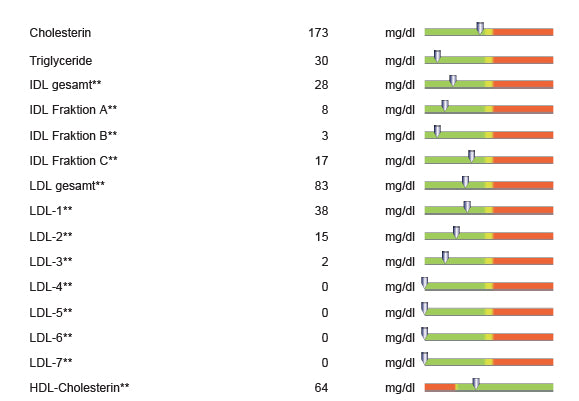
Other common tests – such as the checkup offered by statutory health insurance companies – also only determine a few values in the blood serum, such as total cholesterol, the levels of two lipoproteins (non-HDL and LDL cholesterol), triglycerides, and blood sugar. For cholesterol alone, numerous other, sometimes significantly more informative, tests are available, but these would have to be requested separately. The checkup is by no means bad – but it remains only a basic screening, and many other factors are never tested.
I would like to clarify that doctors do not receive commissions, kickbacks, or anything similar for samples sent to external labs. That would now even be a criminal offense. Even though I often have lab tests done worth several hundred euros, which the lab company bills directly to my patients, the only thing I receive in return is the written report (and – admittedly – truly excellent customer service). Only the "basic lab work," which includes the complete blood count, and any tests performed on-site, can be billed directly to the patient by a doctor. Therefore, it is simply not true that increased blood testing is a way to make money at the expense of patients or insurance companies.

The real difference, by the way, is not the cost.
Because it obviously takes much less time to tell a patient that "everything is fine" in their complete blood count than to explain to them exactly that the measured composition of their blood lipids is anything but good and that a change in diet can only be urgently recommended, even if the typical cholesterol levels may still look "normal", and the problems are only visible in special tests.
But the effort involved in ordering such lab tests and then explaining them properly can be very worthwhile. Sometimes it makes the difference between an early heart attack and a happy, healthy, and long life.
"Virtually all my patients have demonstrably become healthy thanks to a low-lectin, -free diet." THEIR INFLAMMATION REGULATIONS FALLEN BELOW THE DETECTION LIMITS.